Shaping the Future of the Sangetsu Design Award with the Jury
To mark the launch of the Sangetsu Design Award 2025, a kickoff roundtable was held with the jury members and the Sangetsu Design Award Secretariat.
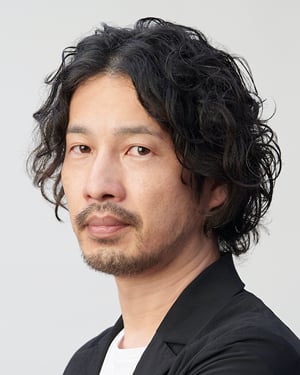
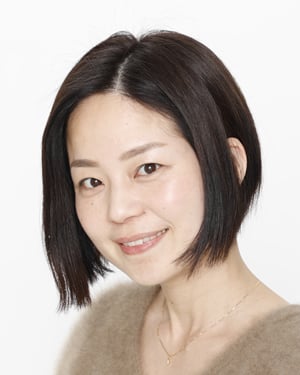
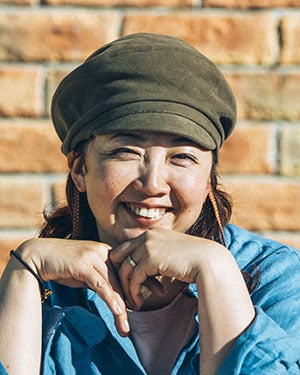
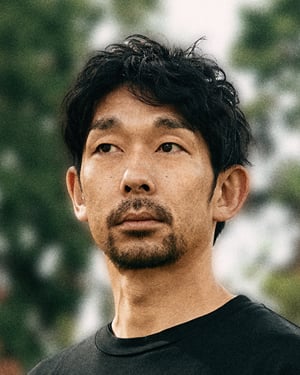
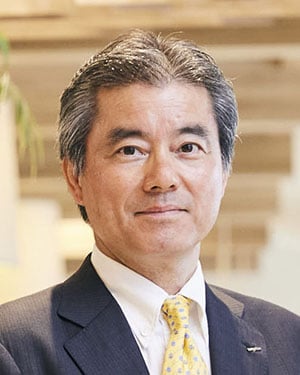
This year’s jury once again includes Kentaro Yamazaki, Nozomi Zama, Chie Morimoto, and Hokuto Ando, with Yasumasa Kondo, President of Sangetsu Corporation, serving as Chief Juror. With a team that judged together last year, we can expect even greater depth and evolution in the Award’s vision.
In this report, we share highlights from the roundtable discussion — exploring the role of the award, its new initiatives, and the jury’s hopes for this year’s applicants.
The Appeal of the Sangetsu Design Award — an “Open” Competition
The jury noted that, unlike many other awards, the Sangetsu Design Award is unusually open. Last year’s applicants ranged from elementary school students to applicants in their 80s — including established design professionals, students from non-art universities, and homemakers. The field was strikingly broad and diverse.
Some panel members suggested that higher entry standards might help preserve cultural quality and dignity, and that stricter rules could be appropriate. After discussion, however, we agreed that clarifying the Award’s goals is more important than tightening entry rules. We reaffirmed the Award’s purpose: to foster culture broadly and inclusively and to broaden the base of the design community.
For that reason, the current accessibility — the low barrier to entry — is not a weakness but a strength.
As an “open” competition, the Sangetsu Design Award aims to showcase not only polished works, but also promising pieces and ideas that move people.
 Entries from Last Year’s Primary Round Screening
New initiatives: “Online Submissions” and “Consultation Sessions”
To make the Award even more applicant-centred, we’ve updated how the Sangetsu Design Award will be run this year.
1. Online submissions:
To reinforce the Award’s “open” character and lower barriers for entrants regardless of experience or location (including overseas), submissions are now accepted digitally.
2. Pre-final consultation sessions:
Prior to the final judging, we’ve introduced one-on-one consultation sessions that allow jury members and applicants to speak directly — a new opportunity to develop ideas further.
The jury expressed clear hopes for these changes:
- (1) “Rather than simply evaluating finished work, we can give feedback that helps ideas grow — giving judging a constructive purpose.”
- (2) “Some entries that feel overly tailored to win a contest might improve through dialogue.”
- (3) “If applicants can discuss their projects before the final round and then dig deeper, that process itself will create real joy for entrants.”
 Scenes from last year’s final judging session
The Secretariat will continue refining operations to make the Award a co-created experience between applicants and the jury.
What the Jury Is Looking For: Experience and Physicality
The jury emphasized that design is a tactile, sensory practice — tactility and embodied experience matter.
They raised concerns about a growing tendency to design only on screen (for example, using Illustrator) without real-world testing or sensory verification.
Examples the jury gave:
- (1) When designing a drink package, imagine the act of drinking, the contexts and times it will be used, and how it reads from every angle. Yet some designers start without tasting the product or observing how the package sits and behaves in situ.
- (2) Limited real-world observation of light leads to unnatural rendering or compositing — the way light hits surfaces, casts shadows, and creates depth is often misrepresented when not studied.
Designs conceived only in the head and detached from actual experience struggle to elicit instinctive reactions such as “delicious” or “I want this.”
For the Sangetsu Design Award 2025, the jury expects entries that go beyond desktop concepts: proposals grounded in applicants’ embodied experiences and sensory exploration.
 Scenes from last year’s final judging session
 This report also includes last year’s Primary Round entries and the jury lineup.
We hope these materials spark ideas and help you prepare your application. We look forward to your submission.